I often analogise human interconnectedness as a series of entangled strings that must relax and parallel themselves, recognising their homogeneous fabric, which is the foundation of human progress. We seem to have forgotten this, living in a short transient passage of life within a larger civilisation with a bungled chaos of attacking opinions, protests, and many unheard calls for peace.
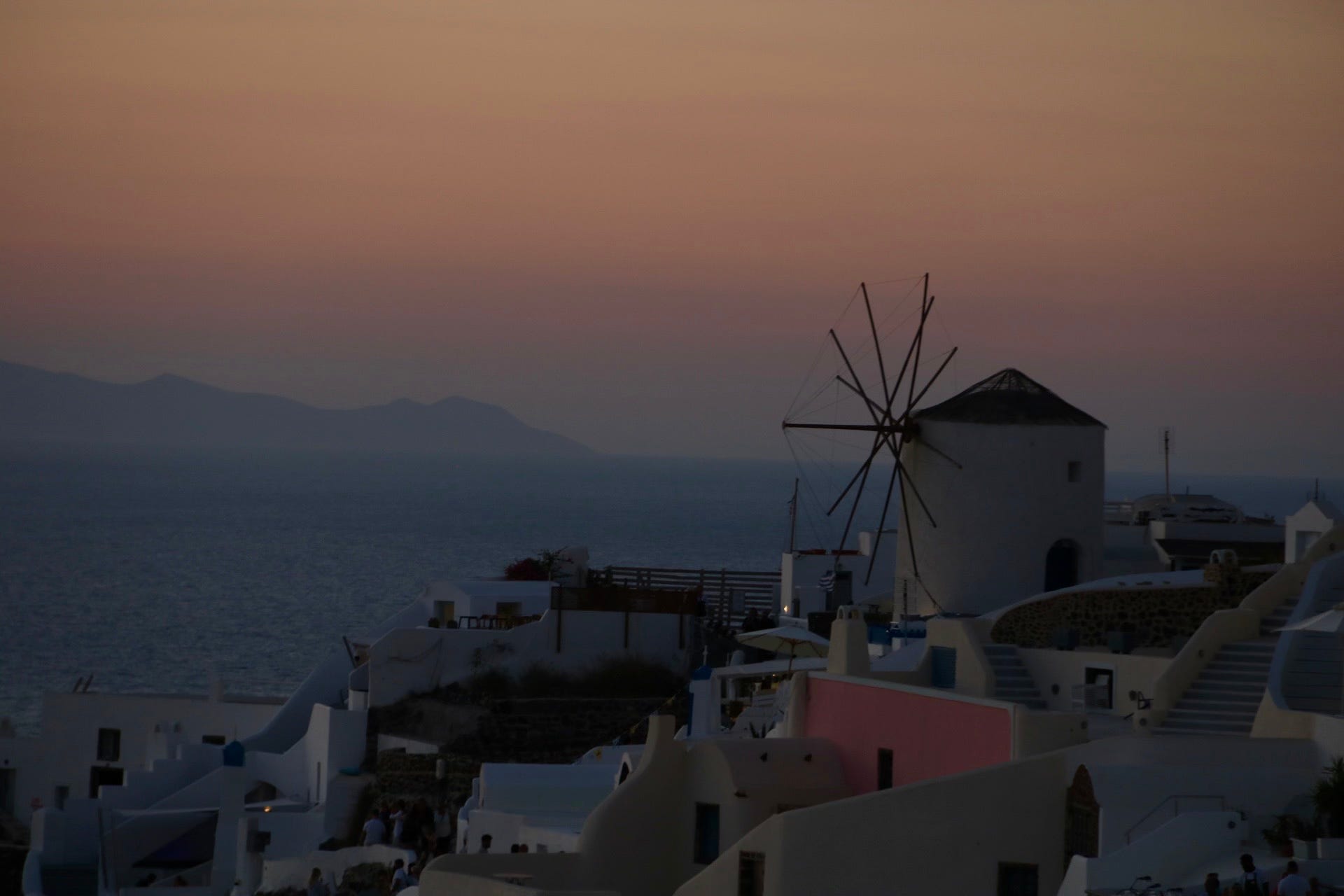
Recently, I travelled to Santorini, a paradise of silvery silhouettes of the caldera and the enthralling, fresh mist of the Aegean, yet attempted to not miss the most vital thread: the people who call a ‘touristified’ holiday haven home.
I chatted with a tall, sincere, jolly man, Pericles, who has spent eight seasons working in the heart of Santorini’s hospitality sector. In a world that often feels divided, he spoke to me about a Greek frequency that still vibrates today: a mindset of hospitality.
*
Wafi: You’ve been here for eight seasons now. That’s a lot of time. What has working here taught you about yourself and about what truly matters in the world?
Pericles: What matters here on the island, especially during the season, is that our guests have a good time, good food, good information.
Wafi: What brought you into hospitality? Is it a family history?
Pericles: My family is not only in this sector, though much of my family on other islands work with tourists now. But for me, it is in our DNA. If you know of Zeus from ancient times—Zeus Xenios [the protector of guests]—I think that it is inside us. The Greek mindset. It is out in the hospitality in Greece.
*
For me, this was the ‘human thread’ in its purest form. Xenia—the Greek law of guest friendship and ritualised hospitality—wasn’t just a courtesy; it was an acknowledgement that we are all bound by the same need for belonging.
*
Wafi: To all the tourists who flock here, do you think there is something they don’t understand about Santorini, or even about Greece?
Pericles: They come for vacations, to have a good time, and that is important. But I think they miss the history. This island has more than 7,000 years of history. That is the most important thing to understand—it’s a very historical island.
*
I do wonder whether the present is the most chaotic time in history, or whether it is too naïve to think so, and rather, history contained as many oxymoronic beliefs and controversial actions, yet they stayed blanketed; and the present simply allows us every possible platform to express our thoughts.
*
Wafi: My last question: if every single person in the world was listening to you right now, what one message would you give them?
Pericles: Come to Greece! For the food, for the history. But most importantly... Respect. Respect everybody. It doesn’t matter the colour, the religion, or where they came from. You must have respect for everybody. That is the lesson I live by every day.
*
As we took a selfie and parted ways, his words lingered. In my study of PPE (Philosophy, Politics, Economics), we search for complex solutions to global divisions. Yet, here was a man in a bustling restaurant, distilling his life’s work into a single, foundational thread: the language of mutual respect.