A bleak warehouse. Rampant dust in the shades of dim daylight. A hunched figure.
Standing crooked, hardly moving, yet central, as if posing in a frame. Layers and layers of dark, he blended in with his lifeless surroundings. He wore plain black overalls that had evidently turned grey amongst countless coatings of soot. If he were not wearing clothes, his bony ribs would show. Below his overalls, thick, black sandals bore his hardened feet. His grimy toenails lurched out; their length indicating his longstanding indifference to his appearance. What creature could live with such little dignity? Was the nature of humanity not instituted in pride and esteem?
I noticed the hissing of dust as it slithered off his sandals: he took his first step. Oblivious of my presence, his back turned to me, I heard a click of his joints as he sluggishly limped towards a shelf, while gripping a large canvas. His steps didn’t echo, nor make the slightest of sounds that would alarm even the shyest of squirrels outside. This was his world. Like Sisyphus with his boulder, he simply ploughed forward. Although it was crystal clear this was no work that could not be marked as futile, he seemed to work nonchalantly, in robotic, inveterate, minuscule movements, nothing of interest, nor any semblance of resentment. Trudging along, he reached the shelf. His stature was evidently not one designed for lifting. He swung his body down, and ruggedly threw the canvas onto a stack of similar ones that lay on the shelf towering above him. As he hinged, I glimpsed the side of his face. Wrinkles of old age had shredded away the skin, and his jaw defined his greyish cheek. His nose jutted out, and coarse facial hair seemed to abrade his face, exacerbating his indifference to physical appearance. His eye was bland. It expressed no emotion. The window to his soul was opaque.
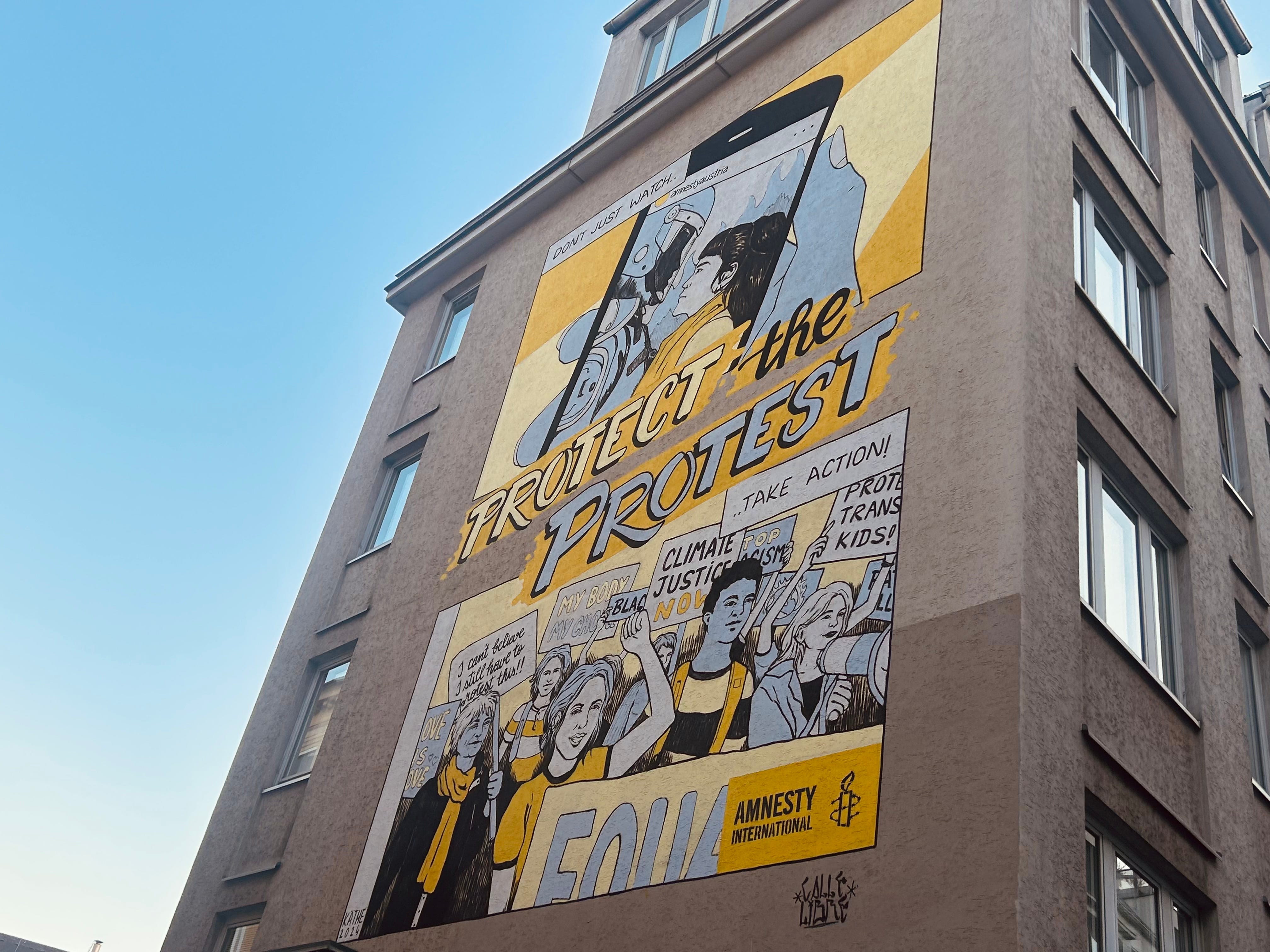
As he swung down to launch another canvas to the top of the shelf, I noticed it was a placard. In scrawny brushstrokes was painted the word ‘Peace’ and the background contained black and white stripes, perhaps once illuminating colours and memories that had now evanesced in this basement of despondency. As he stretched, and his shirt pulled with his wrist exposed, I made out a dove in tattoo ink. Next to it was printed an infinity sign. It was the only sight I had noticed so far that had collected no dust. Yet, though it’s sharpness panged my eyes in the apathetic atmosphere around him, I could not stop pondering upon his evident insistence on concealing his ink.
He shelved the canvas.
After having strained to reach the shelf, his back crouched again, and his knees bent in light of his minimal strength. Silence. In his stillness, I experienced a moment of revelation about my presence. For minutes I had been observing this man in intrigue, but now I felt I could not predict his next movement. I wondered what he felt, staring up at the heap of canvases he, presumably, had archived. Did he feel a sense of remorse? Or any emotion at all? Was his seeming indifference infinite?
He emanated a sense of security, contrary to my uncertainty. Although his movements so confounding to my eyes, he was only repeating a mundane routine. Numb. Immune to the deathly echoes of every click and creak in his labour. I spotted his wrinkle-laced fingers reaching up and gently stroking one of the canvases; he seemed to trace his finger along written words and whisper them to himself. I felt even more perplexed. This was no unemotional interaction. Even in the solemn, susurrant whistle of his voice was an inflexion that gave away his emotional susceptibility. Perhaps a memory. But one thing was true: he was not apathetic; rather, in his perceived attempt at expressionless acts, fallible.
His hand came back down to his side. He slowly turned his head. I flinched. But it did not seem as if he was uncovering my presence newly, rather, acknowledging me. As much as I expected a pale, disfigured, unsettling face, he looked at me with an impassive expression, monotonous eyes and a dormant kindness in his eyebrows that seemed determined to overlook my prying, watchful judgements. I could not pretend anymore. I stood up straight and slowly approached him, my eyes still transfixed upon his. I had become so engrossed in this man’s actions I had ignored the details that made him initially so fascinating. Long hairs along his forearms, small, yet significant marks on his hands, signals of his hard labour, and a skinny, hunched figure.
“You’ve been watching a long time.”
His voice, dry, papery, rasping, was exactly as I had imagined upon hearing his earlier whispers. His tone wasn’t accusatory, simply an observation. It was as if there was a serenity in the dull solitude of his surroundings that had become infused within him. Radiating calm.
I felt speechless, not in awe, simply curious. “What are they?”, I said, nodding my head to the stacks of canvases.
“Hopes. All of them are hopes. Were.”
I didn’t understand, but he seemed aware of my silence to his ambiguity. He turned his back and limped once again towards the canvases, and signalled me to follow. I did.
He finally reached a slightly torn, arcane canvas with crisp edges of thick dust. His shoulders shrunk slightly—a small, solemn surrender. The canvas sat against the wall, in rest, smeared with ink. It was a banner. Once bright, now faded. Yet, scrawled upon the canvas, I could still make out an incomplete statement: ‘Justice for’.
He looked at me. His eyes still bland, yet there was a desperation within them: a desire for me to comprehend. His presence felt ancient to me now. I felt restless, in need of clear answers.
“What do you do with these?” I asked.
“I shelve them. I tend to them. I reset them. If no one tends to dying hopes, removes them from the public eye, they rot. They poison. They stagnate. They make people cynical, bitter, stubborn, and dead. Convinced that nothing ever changes. Hope must be constructive. If hope begins to divide, then there is no need for hope at all.”
I tensed. Then, I remembered the engraving of a dove on his wrist. Benign in size, yet so magnificent in its peculiarity, I felt assertive, confident.
“You have hope.” I declared.
Still tranquil, from the heart of reason, he explained. “Look closely. Its wings have begun to fade.” He waited a moment for me to understand, and then pulled down his sleeve.
I stared at him in confusion.
“This place preys on hope. It dissolves my hope. Drowns it in crushed dreams and purposeful injustice. But the time I spend here, I save the dreams of humanity. I save it from a cage of dead hopes.” As he said this seemingly concluding statement, he swivelled his head around the stacks of canvases, banners, bloody flags. Thousands of wishes left unfulfilled. With that, he turned and limped to the next canvas he was yet to shelve, with the same mechanical grace.
I felt an emancipated hope within me. Real, existential, powerful. And yet, it was fragile.